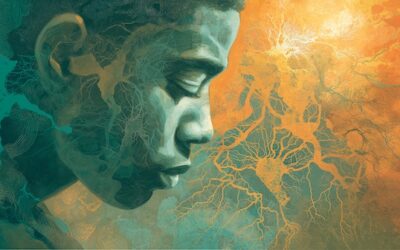

We like to believe decisions are rational.
They are partly rational. But rarely first.
Most decisions begin before the mind writes its explanation. They are shaped by state, attention, emotional charge, identity, and perceived threat. By the time you say, “I have thought this through,” your system has often already selected a direction and recruited logic to support it.
This does not mean you are irrational. It means you are human.
The mind does not operate in isolation. It receives information from the body, the nervous system, the emotional field, memory, expectation, and social context. What you call a decision is often the visible surface of a process that began earlier and deeper.
The field before thought
Before conscious analysis, your system is already filtering reality.
It is asking questions faster than language can form: Is this safe? Is this urgent? Is this familiar? Is this a threat to identity? Is there enough time? Do I have options? Can I trust this person? What happens if I wait?
Those questions shape what becomes visible. Attention highlights certain facts and hides others. Emotional bracing gives some information more weight than it deserves. A compressed state can make a neutral delay feel dangerous. A widened state can make the same delay feel workable.
This is why two people can look at the same situation and make radically different decisions. They are not only interpreting different facts. They are interpreting from different states.
What shapes a decision before cognition
Several upstream forces influence decision quality before formal reasoning begins:
- Autonomic state: A braced system will prioritize speed, control, and protection.
- Attentional bias: The system highlights what confirms urgency or threat.
- Emotional charge: Feelings color meaning before logic evaluates it.
- Horizon perception: Under pressure, the future appears shorter.
- Identity filters: People often reject options that threaten who they believe they are.
Why mindset work often misses the first move
Most leadership and personal development work begins too late in the sequence.
It focuses on beliefs, mindset, reframing, strategy, communication, and behavior. These are useful. But they sit downstream. If the upstream field is compressed, the cognitive tools are being applied inside distortion.
A person can reframe a problem and still remain braced. A leader can have a strong strategy and still execute it from urgency. A founder can analyze data and still ignore the signal that contradicts their emotional preference. A parent can know what response is mature and still react before that knowledge becomes available.
This is not a moral failure. It is a sequencing problem.
When the field is narrowed, cognition serves the narrowed field. When the field is widened, cognition has more room to operate.
Compression makes urgency feel like intelligence
One of the clearest signs of compression is urgency that presents as certainty.
The compressed system does not always feel afraid. It may feel sharp. Decisive. Focused. Unwilling to waste time. These qualities can be useful when there is a real emergency. They become costly when they become the default operating mode.
Under compression, the system moves toward shorter loops. It wants closure. It wants the problem solved. It wants ambiguity removed. It may call this clarity. But real clarity can tolerate enough uncertainty to see the whole field.
This is especially important in complex environments. Business, relationships, health, parenting, creative work, and leadership all require range. They require the ability to hold multiple variables without collapsing into the fastest answer.
Upstream governance changes the decision environment
Sovrenics is built around upstream governance: the ability to adjust the field in which decisions arise before the decision hardens into a position.
This means learning to notice narrowing in real time. It means detecting bracing before it becomes narrative. It means widening attention before urgency becomes command. It means creating enough internal authority that the body does not have to confuse speed with safety.
The goal is not to remove emotion from decision making. That is impossible and not even desirable. The goal is to stop unconscious emotional compression from becoming the hidden author of your choices.
A better question than “What should I decide?”
Before asking what to decide, ask: what state is making this decision?
That question changes everything.
If the decision is being made from bracing, the options will look different. If it is being made from widened attention, the options will change. If it is being made from fear of loss, the future will look smaller. If it is being made from internal authorship, more variables become available.
The decision may still be difficult. But it will be cleaner.
Sovrenics does not promise a life without pressure. It trains the capacity to make higher-quality decisions while pressure is present. That is the real work. Not escape. Governance.
Before your next high-stakes decision, pause and ask: what state is making this choice? Then begin training the upstream field that determines what you can see.